

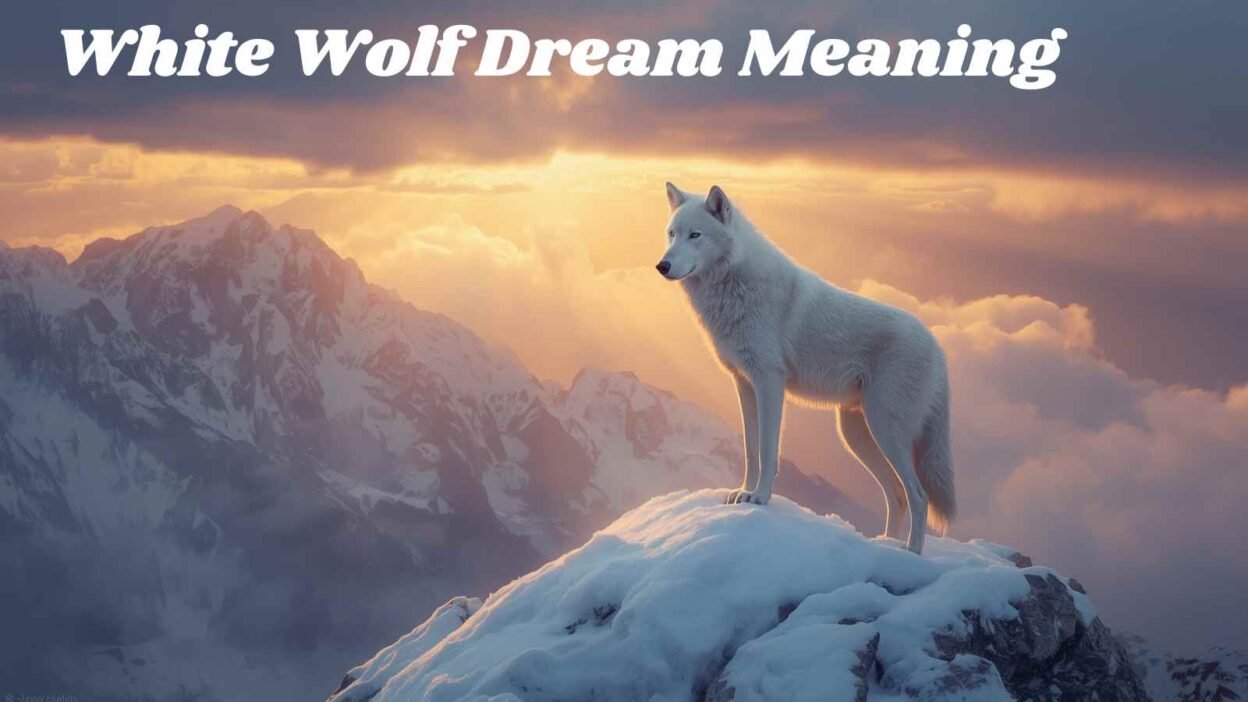
Dreaming of a white wolf is often intense, emotional, and strangely unforgettable. It can leave you waking up with a sense that something important is trying to reach you—something deep inside your mind or spirit that you can’t ignore.
A white wolf in dreams is rarely just an animal. It often reflects inner transformation, hidden emotions, and spiritual awakening. It may appear calm or threatening, guiding you through fear, intuition, or change.
In many cases, this dream connects to inner conflict, especially between your conscious identity and your hidden emotional self.
The Symbolism of the White Wolf in Dreams
The white wolf represents a powerful mix of purity and instinct. It often symbolizes:
- Inner wisdom and intuition
- Spiritual guidance
- Loneliness or emotional independence
- Hidden strength
- Unresolved emotions
Unlike a dark wolf, the white wolf carries a more spiritual tone. It often appears when you are going through a period of self-discovery or emotional awakening.
The Shadow Self: Hidden Emotions & Inner Conflict
In dream psychology, the shadow self represents the parts of you that you avoid—fear, anger, guilt, or desires you suppress.
A white wolf can act as a symbolic form of this shadow. It reflects the struggle between:
- Ego (who you think you are)
- Higher Self (who you truly are beneath conditioning)
When the wolf appears threatening or distant, it often shows that your suppressed emotions are demanding attention.
Why Being Chased by a White Wolf Feels Stronger
If you are being chased, the meaning becomes more intense. This often symbolizes:
- Avoidance of emotional truth
- Fear of confronting trauma
- Pressure from unresolved life issues
- Running from personal transformation
The chase represents your mind trying to escape emotional integration.
Freudian and Jungian Interpretations
Freud’s Perspective
From a Freudian lens, the white wolf may represent repressed instincts and unconscious desires.
Sigmund Freud believed dreams are expressions of hidden urges. A chasing wolf could represent anxiety linked to suppressed emotions or unresolved conflicts from childhood or relationships.
Jung’s Perspective
Carl Jung viewed wolves differently. He believed they represent the shadow archetype—the hidden parts of the psyche that must be integrated for personal growth.
In Jungian psychology, a white wolf often symbolizes:
- Spiritual awakening of the unconscious
- Integration of shadow traits
- A call toward individuation (becoming whole)
Facing the wolf means facing yourself.
Spiritual & Energy-Based Meaning
From a spiritual perspective, the white wolf is often seen as a spirit guide or messenger.
It may signal:
- Emotional blockages releasing
- Activation of higher intuition
- Awakening of inner strength
- Movement through energetic healing phases
In chakra-based interpretations:
- Root chakra → fear, survival anxiety
- Heart chakra → emotional healing
- Third eye chakra → intuition and awakening
A white wolf appearing in dreams may indicate these energy centers are undergoing rebalancing or activation.
Common White Wolf Dream Scenarios
1. Running from the White Wolf
Represents avoidance of emotional truth or fear of change.
2. Being Never Caught
Shows ongoing anxiety or unresolved inner conflict that still hasn’t fully surfaced.
3. Facing the Wolf
A powerful sign of acceptance and emotional maturity.
4. The Wolf Disappearing
Indicates healing or the fading of fear-based emotions.
Gradual Realization vs Sudden Fear
Some people slowly realize the meaning of the white wolf over time. This often reflects gradual emotional healing.
Others wake up suddenly frightened, which suggests:
- Emotional overload
- Suppressed trauma surfacing
- Sudden awareness of inner imbalance
The intensity often matches how ready you are to face your inner world.
Psychological Causes Behind This Dream
White wolf dreams often appear during:
- High stress or anxiety
- Emotional burnout
- Life transitions (breakups, job changes, identity shifts)
- Trauma resurfacing
- Deep introspection phases
Scientific Explanation of the Dream
From a neuroscience perspective, dreams involving wolves are part of emotional processing during REM sleep.
REM sleep is when the brain:
- Processes emotional memories
- Simulates threat scenarios
- Organizes subconscious fears
- Strengthens survival responses
The white wolf may simply be your brain’s way of simulating emotional danger and transformation.
Personal Growth Lessons from White Wolf Dreams
This dream often carries a message:
- Stop avoiding your emotions
- Face what you fear internally
- Trust your intuition
- Accept your shadow self
- Embrace transformation instead of resisting it
The white wolf is not just a threat—it can also be a guide toward inner balance.
Healing & Reflection Tips
If this dream repeats or feels intense, try:
- Journaling your emotions after waking up
- Practicing mindfulness or breathing exercises
- Doing shadow work (exploring suppressed emotions)
- Meditation focused on emotional grounding
- Identifying current life stressors honestly
Healing begins when awareness replaces avoidance.
FAQs
1. Is a white wolf in dreams good or bad?
It is neither strictly good nor bad. It represents transformation, intuition, and emotional truth.
2. Why do I dream of a white wolf chasing me?
It often means you are avoiding unresolved emotions or life changes.
3. What does a friendly white wolf mean?
It symbolizes spiritual guidance, protection, and inner strength.
4. Does it represent a spiritual message?
Yes, many interpretations link it to awakening and intuition.
5. Can stress trigger this dream?
Yes, stress and anxiety are common causes of wolf-related dreams.
6. What does facing the white wolf mean?
It represents acceptance of your shadow self and emotional growth.
7. Is it connected to trauma?
It can be, especially if the dream feels intense or repetitive.
8. What should I do after this dream?
Reflect, journal, and focus on emotional awareness and grounding.
Conclusion
A white wolf dream is a powerful symbol of your inner world. It reflects the balance between fear and growth, shadow and awareness, instinct and consciousness.
Instead of seeing it as a warning, it can be understood as an invitation to face what is hidden, heal emotional wounds, and move closer to your authentic self.
The more you understand the wolf, the more you understand yourself.